My Heart’s in the Highlands
“[I] Journeyed through the highlands, “[it] was perfectly inspiring, and I hope I have laid in a good stock of new poetical ideas.” So wrote Scotland’s national poet, Robert Burns, when in 1787 he completed a long tour of the highlands. His journey took him by two WildLand estates, Glenfeshie and Aldourie, and brought forth from his pen great songs and extemporaneous verse.
First, what was Burns, a poor farmer from Ayrshire, doing roving north through the Cairngorms and into Inverness? Well, after 13 years of writing poems for his own amusement in commonplace books, in letters to friends or for delivery in pubs to riotous groups, Burns had finally got enough support to bring out a little published collection of his work; the Kilmarnock Edition as it is now known.
It was an overnight success. Scotland’s literary scene knew immediately that they had a real genius on their hands. Burns went from deep poverty to relative financial stability in the blink of an eye. More importantly for his tour, he was also a man that everyone wanted to meet. Invitations to visit were extended to Burns by the great and the good across the country, allowing him to stay overnight at stately homes all through his tour.
Another motivation for the tour was also to refresh his poetic muse. From his earliest works, Burns had used nature as an inspiration and as a source of metaphor;
The moorcock springs on whirring wings
Amang the blooming heather:
Now waving grain, wide o’er the plain,
Delights the weary farmer;
And the moon shines bright, as I rove by night,
To muse upon my charmer.
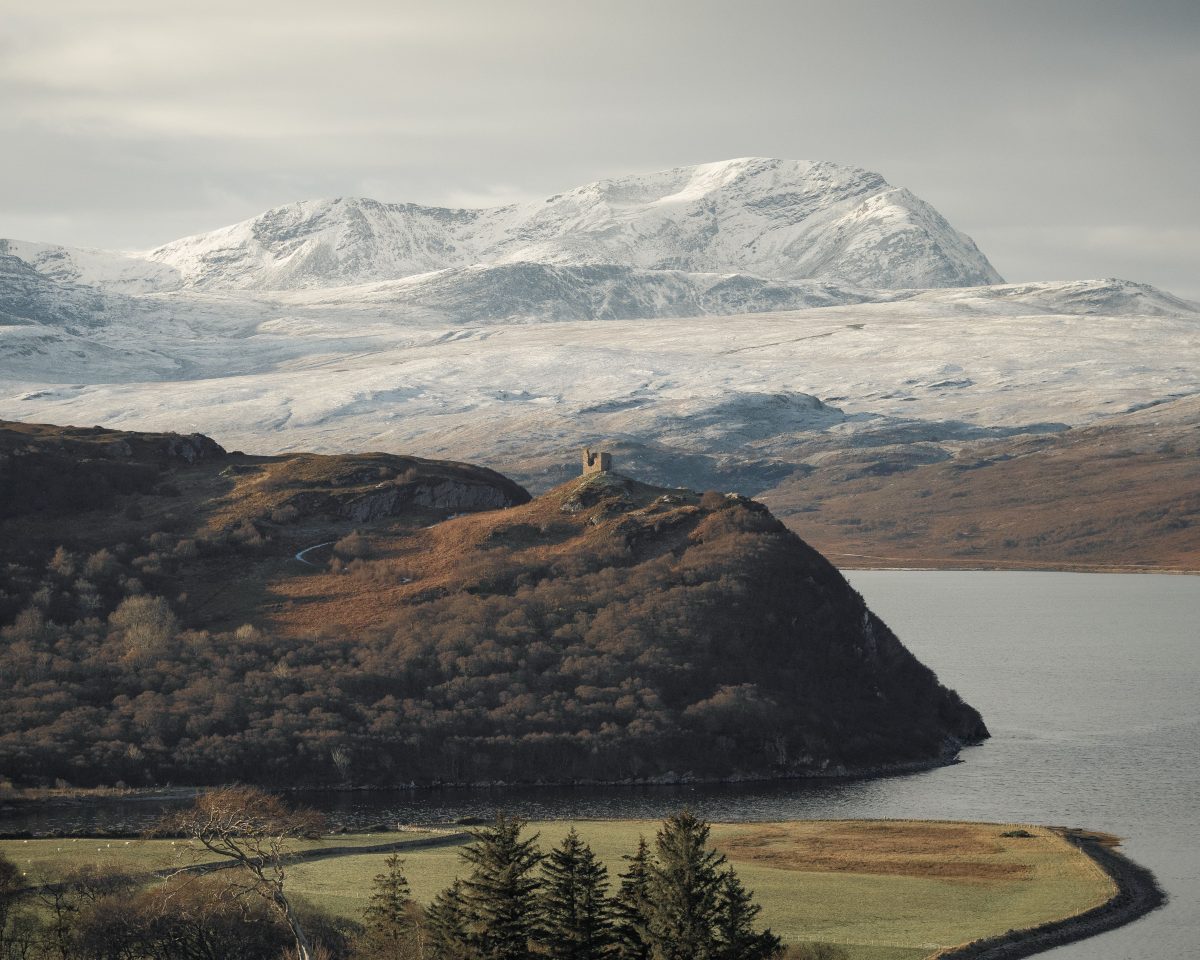
An adventure around the north would expose the young poet to far more highland grandeur and drama in the landscape than he would find in his handsome but homely agricultural landscape of Ayrshire.
Burns travelled slow by modern standards. He and his friend Nicoll went by horse drawn chaise on the rough highland roads, and they would regularly climb down from their little two seater cart to stretch their legs and visit waterfalls, gorges, romantic castle ruins and the like.
The landscapes of Scotland can feel timeless. In fact, the country through which Burns journeyed was in many ways a country on the brink of radical change. At home, centuries old subsistence farming was being replaced by the industrial revolution and agricultural overhaul.
Abroad, Scots were now able to access the British Empire, and found markets, opportunities and profits overseas, with the money paying for big changes at home. Burns saw all of this change on his journey, and remarked upon it.
Relevantly for us at WildLand, Burns wrote a long poem to a landowner encouraging him to rewild the lands under his care, for the benefit of birds, fish, hares and humans. It is a striking piece of nature advocacy. But I’ll get to that in a moment. First, Burns had to contend with the early flickers of industrialisation.
Very early in his journey, he stopped at Carron by the broad river estuary the Firth of Forth. The whole of this ancient landscape would soon become the epicentre of iron making in the entire British empire, with central belt iron helping build much of the infrastructure of imperial expansion: ships, bridges, railways.
Burns and his companion overlooked the great blast furnaces from a local Inn. In a characteristic moment of poetic vandalism, Burns used a diamond stylus to engrave his impression of the Ironworks onto a pane of glass.
We cam na here to view your works
In hopes to be mair wise,
But only, lest we gang to Hell,
It may be nae surprise
In other words; there’s nothing to learn here, only a human replica of hell built on earth.
Burns carried on north, along the same route travellers take to reach Glenfeshie, or any other of the WildLand areas. He stopped in at the amazing Hermitage walk by Dunkeld – now managed by the National Trust and more popular than ever – praising the “the incessant roar of headlong tumbling floods” of the dramatic highland waterfalls.
Near the modern House of Bruar country store on the A9 road, not far south of Glenfeshie, is the amazing Falls of Bruar, the great gorge where the Bruar Water tumbles over rock. Burns visited, guided personally by the landowner responsible for the landscape.
The riverbanks were denuded of all timber. No tree or bush grew alongside. All the useful wood felled, presumably, by axes sent by the estate. In a remarkable letter, Burns entreats his host the landowner to replant the riverbanks and invite nature back into the landscape.
The letter contained a poem written from the perspective of the river itself. The river asks that the landlord;
shade my banks wi’ tow’ring trees,
And bonie spreading bushes.
Delighted doubly then, my lord,
You’ll wander on my banks,
And listen mony a grateful bird
Return you tuneful thanks.
The river says that not only will many birds return to the river, but mountain hare too would find a happy home in the bushes and trees thus replanted, and humans would find practical, and not just romantic, retreat amongst the woodland.
Here shall the shepherd make his seat,
To weave his crown of flow’rs;
Or find a shelt’ring, safe retreat,
From prone-descending show’rs.
Burns is often credited with being ahead of his time, arguing passionately against social hierarchies and privileges based on noble birth, celebrating the rights of women, writing in empathy of the poor enslaved people being stolen from Africa and taken to the Americas.
An often overlooked aspect of his Bardic worldview is his passionate advocacy for the healing and inspirational role of nature, and the role of land custodians to protect, and if necessary, heal wearied or degraded lands.
Burns’ journey around the north was, in his own words, ‘perfectly inspiring’. Of the many lyrics and poems he penned during his tour and after, there is one song that stands out. It is set to an old Gaelic air, perhaps one collected by the Bard on his travels. The simple words resonate with many who have roved north as Burns did;
Farewell to the Highlands, farewell to the North,
The birth-place of Valour, the country of Worth ;
Wherever I wander, wherever I rove,
The hills of the Highlands for ever I love.
If you’d like to stay in the wildlands Burns travelled through, view our properties to find the stay right for you.
Written by Alistair Heather – a writer, history enthusiast and television presenter. He is the host of Burns Night 2026 on BBC One, and runs a popular history instagram page @Historic_Ally