
My Heart’s in the Highlands
“[I] Journeyed through the highlands, “[it] was perfectly inspiring, and I hope I have laid in a good stock of new poetical ideas.” So wrote Scotland’s national poet, Robert Burns, when in 1787 he completed a long tour of the highlands. His journey took him by two WildLand estates, Glenfeshie and Aldourie, and brought forth from his pen great songs and extemporaneous verse.
First, what was Burns, a poor farmer from Ayrshire, doing roving north through the Cairngorms and into Inverness? Well, after 13 years of writing poems for his own amusement in commonplace books, in letters to friends or for delivery in pubs to riotous groups, Burns had finally got enough support to bring out a little published collection of his work; the Kilmarnock Edition as it is now known.
It was an overnight success. Scotland’s literary scene knew immediately that they had a real genius on their hands. Burns went from deep poverty to relative financial stability in the blink of an eye. More importantly for his tour, he was also a man that everyone wanted to meet. Invitations to visit were extended to Burns by the great and the good across the country, allowing him to stay overnight at stately homes all through his tour.
Another motivation for the tour was also to refresh his poetic muse. From his earliest works, Burns had used nature as an inspiration and as a source of metaphor;
The moorcock springs on whirring wings
Amang the blooming heather:
Now waving grain, wide o’er the plain,
Delights the weary farmer;
And the moon shines bright, as I rove by night,
To muse upon my charmer.

An adventure around the north would expose the young poet to far more highland grandeur and drama in the landscape than he would find in his handsome but homely agricultural landscape of Ayrshire.
Burns travelled slow by modern standards. He and his friend Nicoll went by horse drawn chaise on the rough highland roads, and they would regularly climb down from their little two seater cart to stretch their legs and visit waterfalls, gorges, romantic castle ruins and the like.
The landscapes of Scotland can feel timeless. In fact, the country through which Burns journeyed was in many ways a country on the brink of radical change. At home, centuries old subsistence farming was being replaced by the industrial revolution and agricultural overhaul.
Abroad, Scots were now able to access the British Empire, and found markets, opportunities and profits overseas, with the money paying for big changes at home. Burns saw all of this change on his journey, and remarked upon it.
Relevantly for us at WildLand, Burns wrote a long poem to a landowner encouraging him to rewild the lands under his care, for the benefit of birds, fish, hares and humans. It is a striking piece of nature advocacy. But I’ll get to that in a moment. First, Burns had to contend with the early flickers of industrialisation.
Very early in his journey, he stopped at Carron by the broad river estuary the Firth of Forth. The whole of this ancient landscape would soon become the epicentre of iron making in the entire British empire, with central belt iron helping build much of the infrastructure of imperial expansion: ships, bridges, railways.
Burns and his companion overlooked the great blast furnaces from a local Inn. In a characteristic moment of poetic vandalism, Burns used a diamond stylus to engrave his impression of the Ironworks onto a pane of glass.
We cam na here to view your works
In hopes to be mair wise,
But only, lest we gang to Hell,
It may be nae surprise
In other words; there’s nothing to learn here, only a human replica of hell built on earth.

Burns carried on north, along the same route travellers take to reach Glenfeshie, or any other of the WildLand areas. He stopped in at the amazing Hermitage walk by Dunkeld – now managed by the National Trust and more popular than ever – praising the “the incessant roar of headlong tumbling floods” of the dramatic highland waterfalls.
Near the modern House of Bruar country store on the A9 road, not far south of Glenfeshie, is the amazing Falls of Bruar, the great gorge where the Bruar Water tumbles over rock. Burns visited, guided personally by the landowner responsible for the landscape.
The riverbanks were denuded of all timber. No tree or bush grew alongside. All the useful wood felled, presumably, by axes sent by the estate. In a remarkable letter, Burns entreats his host the landowner to replant the riverbanks and invite nature back into the landscape.
The letter contained a poem written from the perspective of the river itself. The river asks that the landlord;
shade my banks wi’ tow’ring trees,
And bonie spreading bushes.
Delighted doubly then, my lord,
You’ll wander on my banks,
And listen mony a grateful bird
Return you tuneful thanks.
The river says that not only will many birds return to the river, but mountain hare too would find a happy home in the bushes and trees thus replanted, and humans would find practical, and not just romantic, retreat amongst the woodland.
Here shall the shepherd make his seat,
To weave his crown of flow’rs;
Or find a shelt’ring, safe retreat,
From prone-descending show’rs.

Burns is often credited with being ahead of his time, arguing passionately against social hierarchies and privileges based on noble birth, celebrating the rights of women, writing in empathy of the poor enslaved people being stolen from Africa and taken to the Americas.
An often overlooked aspect of his Bardic worldview is his passionate advocacy for the healing and inspirational role of nature, and the role of land custodians to protect, and if necessary, heal wearied or degraded lands.
Burns’ journey around the north was, in his own words, ‘perfectly inspiring’. Of the many lyrics and poems he penned during his tour and after, there is one song that stands out. It is set to an old Gaelic air, perhaps one collected by the Bard on his travels. The simple words resonate with many who have roved north as Burns did;
Farewell to the Highlands, farewell to the North,
The birth-place of Valour, the country of Worth ;
Wherever I wander, wherever I rove,
The hills of the Highlands for ever I love.
If you’d like to stay in the wildlands Burns travelled through, view our properties to find the stay right for you.
Written by Alistair Heather – a writer, history enthusiast and television presenter. He is the host of Burns Night 2026 on BBC One, and runs a popular history instagram page @Historic_Ally

Celebrating UNESCO recognition for the Flow Country
Today’s confirmation that the Flow Country has become Scotland’s first UNESCO World Heritage Site inscribed for its globally important ecosystem has been warmly welcomed by Wildland’s Chief Executive Tim Kirkwood.
UNESCO’s World Heritage Committee has approved the bid at its congress in New Delhi, awarding the designation, reserved for places of special cultural, historical or scientific significance, for the Flow Country’s outstanding universal value in ecosystem quality and processes.
Tim Kirkwood commented:
“Congratulations to everyone involved in this very special moment of celebration. Securing UNESCO World Heritage Site status is a huge achievement for the Flow Country Partnership after so many years spent carefully building the scientific, economic and community cases for inscription.
“Its success is perfect testament to a shared vision for this beautiful, unique, fragile, diverse landscape and the determination of community representatives, businesses, scientists, conservationists, politicians and others to see the Flow Country’s global significance recognised and its future guaranteed.”
The Flow Country World Heritage bid was brought forward by the Flow Country Partnership (formerly the Peatlands partnership), a broad group representing a wide range of stakeholders in the peatlands of Caithness and Sutherland. Wildland has helped to fund and guide the project alongside The Highland Council, NatureScot and RSPB Scotland.
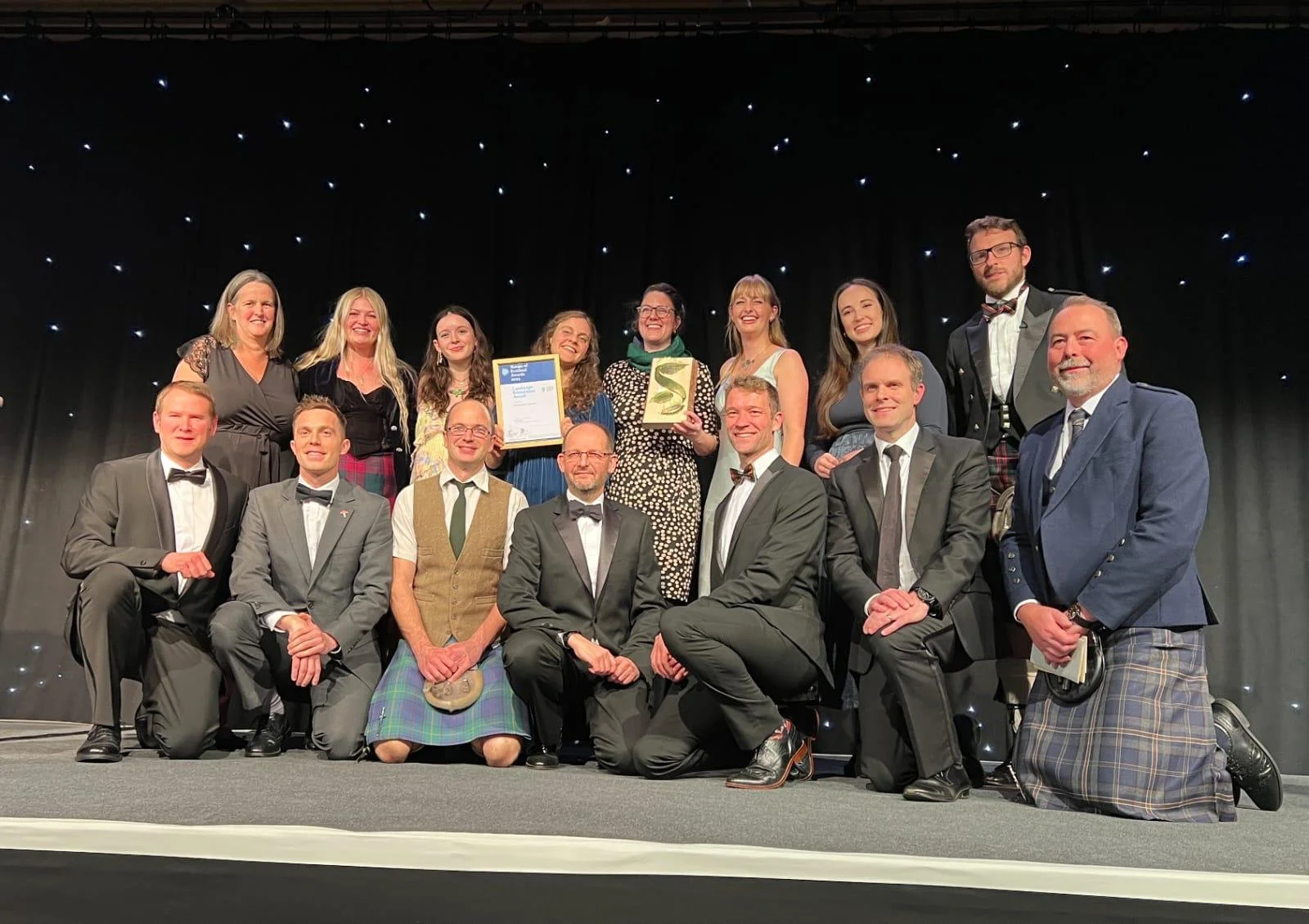
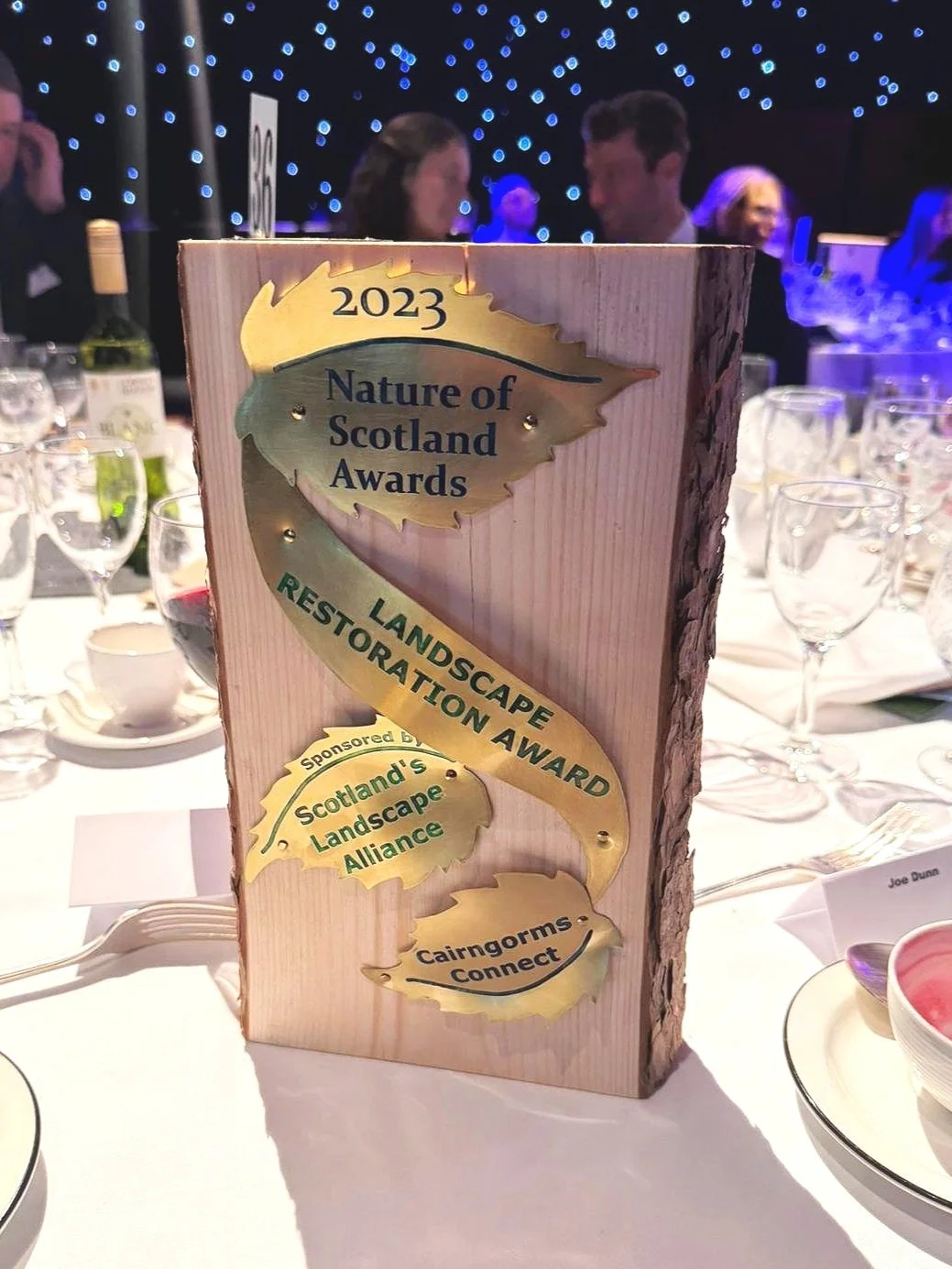
Cairngorm Connect Success at Nature of Scotland Awards
It was a tremendous occasion celebrating Nature Conservation in Scotland. We were delighted that Cairngorm Connect received the Landscape Regeneration Award in recognition of what the partnership has achieved since inception in 2014.
As a founding member of Cairngorm Connect, Wildland along with RSPB, Nature Scot and FLS has collaborated to multiply our conservation efforts across the wider Cairngorm National Park. The Partnership is now entering a new phase and we look forward to continuing our work with and seeing the environmental rehabilitation grow from strength to strength.
If you want to know more about the Cairngorm Connect and get involved in the various volunteer projects please don’t hesitate contact a member of the Wildland Conservation Team at conservation@wildland.scot.
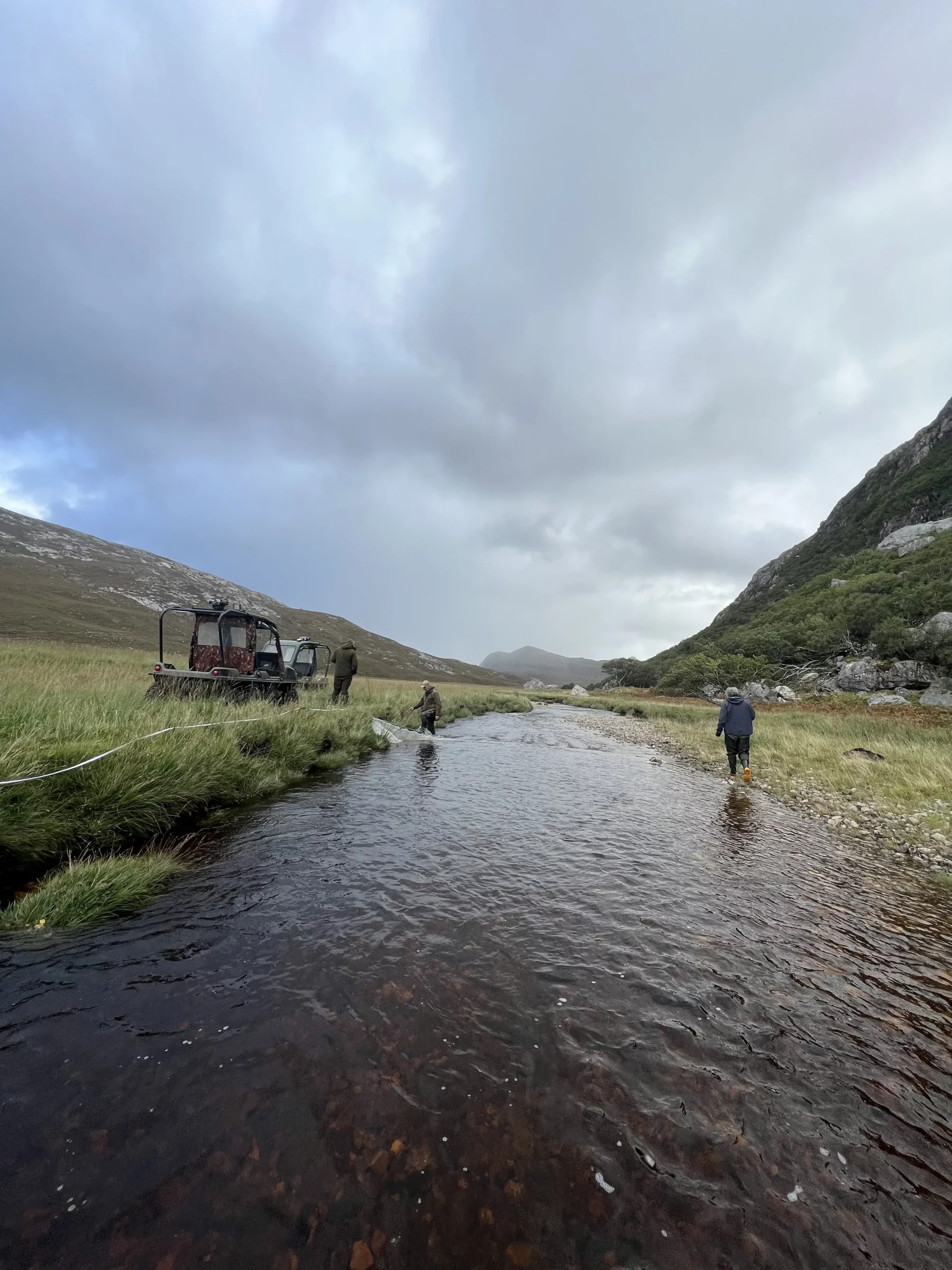
Electrofish Monitoring on Northern River Catchments
To describe the process simply, an electrical current is put into the water which temporarily disables the fish so they are able to be easily collected with a net. The fish are then placed gently into a bucket containing an anaesthetic solution. Once they are under anaesthesia, they are carefully measured and a small scale sample is taken, this is then sent away to a lab to determine exactly how old the fish is. After hatching, juvenile salmon can remain in their natal river until they are up to 5 years old before beginning their first migration to the sea. Discovering how old each fish is in comparison to its size, can give us lots of important information such as how well the fish has been feeding, which is an indicator of how healthy the overall ecosystem is.
When done properly, electrofishing causes no harm to the fish and is a valuable tool in determining how productive our river systems are.
We are delighted to report that at almost all survey sites there appeared to be strong numbers of juvenile salmon around, which we are extremely relieved about given the notably hot and dry conditions we experienced earlier in the year.
One of the scientists even said, referring to our Kinloch River “It doesn’t get any better than this”, considering the terrifyingly concerning reductions in salmon numbers that many other UK rivers, and beyond are facing, this statement is extremely reassuring for us to hear.
We hope that this positive trend continues again next year. Meanwhile, we will continue to do our best to protect our fish and improve their freshwater habitats.
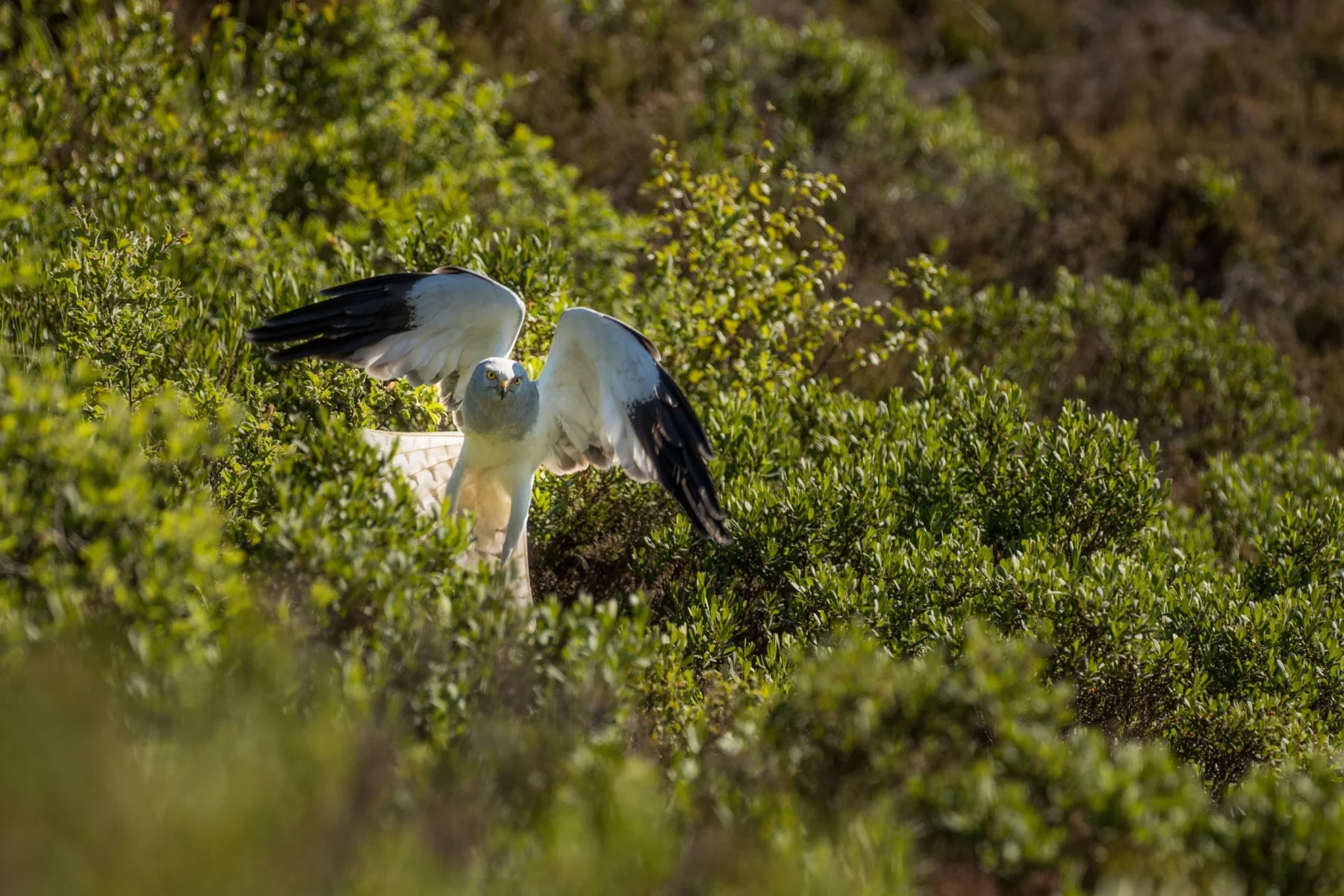
Hamza: Strictly Birds of Prey
We pride ourselves on the protection, and conservation of the land, the animals and the communities across our estates, so to see one aspect of the 200 year vision being celebrated, created a real sense of pride for us all at Wildland.
Our fellow Wildlander Ronan Dugan, who is part of the conservation team, who undertook the count, says;
“It has been a unprecedented season for hen harriers in Wildland Cairngorms with 11 successful nests rearing an estimated 41 chicks. This is a true testament to our dedicated landscape scale habitat restoration work on the ground that we are now seeing the recovery of a threatened species such as hen harriers.”
If you missed the show when it originally aired, you can watch it On Demand in the UK via BBC iPlayer or through the following link.
We hope that you will be inspired to see these magnificent birds thriving in Wildland Cairngorm.

Bringing beavers back to the Cairngorms National Park
The Park Authority is working closely with a range of partners and land managers on a carefully considered proposal to translocate beavers from the Tay catchment to the upper Spey catchment. The release sites are at Rothiemurchus, Wildland Cairngorms and RSPB Scotland Insh Marshes.
Beavers are considered ‘nature’s engineers’ with an incredible ability to rework, restore and re-naturalise the landscape, helping combat climate change and boost biodiversity. From coppicing riverside trees to damming smaller water courses, creating narrow canals and rich wetlands, beavers create the ideal habitat for wildlife to thrive, as well as slowing the flow of water which reduces flood risk downstream.
Following a series of informal ‘Beaver Blethers’ back in March, the Park Authority and partners are back out on the road to speak with residents, farmers, business-owners, fishery interests and other groups as part of the formal six week public engagement process, which runs from 14 August to 25 September. The information gathered at this second series of ‘Beaver Blethers’, will help inform the licence application to NatureScot.
The events will be taking place from 2-7pm and are as follows:
-
– 17 August – Kincraig Hall, open to the general public
-
– 23 August – Nethybridge Hotel, open to fishing interests
-
– 30 August – Duke of Gordon Hotel, Kingussie, open to the agriculture sector as well as members of the public
-
– 7 September – Inverdruie House Tipi, Aviemore, open to local business interests
-
– 13 September – Grant Arms Hotel, Grantown-on-Spey, open to the general public
-
– 19 September – Aberlour Hotel, open to fishing interests as well as the general public.
Dr Sarah Henshall, Head of Conservation at the Cairngorms National Park Authority said: “Working with land managers, we aim to release beaver families in three locations in the Upper Spey catchment. In collaboration with land managers and communities we then plan further releases within the catchment over the next few years to ensure there are enough for a viable population. Our beavers will be coming from the Tay Catchment and will be trapped under licence by The Beaver Trust. They will go through health checks in a zoo – and if we get the go ahead from NatureScot – they will then be transported to their release sites in the Cairngorms National Park soon after.
“We need to apply for a licence from NatureScot as beavers are a European Protected Species. To be successful in this application we need to show that there is enough suitable habitat for a self-sustaining population of beavers to live in the Park; that there are land managers willing to have the first beavers in the Park released on their land; that we have a Management Plan identifying any issues that beavers may cause and outlining solutions to minimise or avoid any unacceptable impacts to protected or valuable habitats; and that there is a majority of supportive public opinion. Over the next six weeks we’ll be hosting lots of opportunities for local communities to share their views in meetings, events, and an online survey.”
Three local land managers have come forward to be involved in the project. One of those is Rothiemurchus. James Grant for Rothiemurchus said, “Beavers have become re-established in Scotland, and they are modifying the landscape. We support this plan for the Upper Spey and are pleased that there may be a suitable site for an early reintroduction within Rothiemurchus Forest. We look forward to considering the views expressed in the formal engagement, and if it proceeds, working with the support and advice of the Park Authority and NatureScot to implement any mitigation.”
Wildland Limited is also set to host a family of beavers. Thomas MacDonell, Director of Conservation for Wildland Limited said, “Our habitat restoration work over the last 20 years has resulted in one of our sites being considered suitable as a beaver release site, this is a welcome recognition of our contribution to a healthier environment. We are looking forward to welcoming beavers to the Spey catchment as it is expected that they will bring many positive outcomes.
“Others may be less sure, perhaps they are concerned about potential negative outcomes for them, this is why this engagement process is extremely helpful. At Wildland Cairngorms we support both the relocation and the engagement.”
Furthermore, RSPB Scotland Insh Marshes was identified as being highly suitable for beavers. Karen Birkby, the Site Manager, said, “As part of our long-term vision for Insh Marshes – to improve the functioning of the river Spey and its floodplain for nature and people – we’ve been really keen to get beavers back. They are fantastic animals with the ability to provide many benefits to other wildlife and the nature reserve is really suitable for them. So we were delighted to offer it up as one of the initial release sites. We are looking forward to continuing discussions with our neighbours as part of the wider engagement and are hopeful that, by the end of next year, beavers will be making their new home here with all the benefits that will bring.”
Depending on the results of the engagement process, the first beaver family could be released in late Autumn of this year. Sandy Bremner, Convener of the Cairngorms National Park Authority Board, said: “Beavers will bring benefits to the Park’s natural environment and, in future, they could also provide an economic boost in the form of ecotourism.
“Where there are concerns, it is very important that they are aired. I would urge anyone with an interest in finding out more, or making their views known, to take part in the formal public engagement process. This is a highly significant moment for the Cairngorms National Park, with plans to return a lost species after 400 years.”
For more information or to make your views known, please go here: www.cairngorms.co.uk/beavers
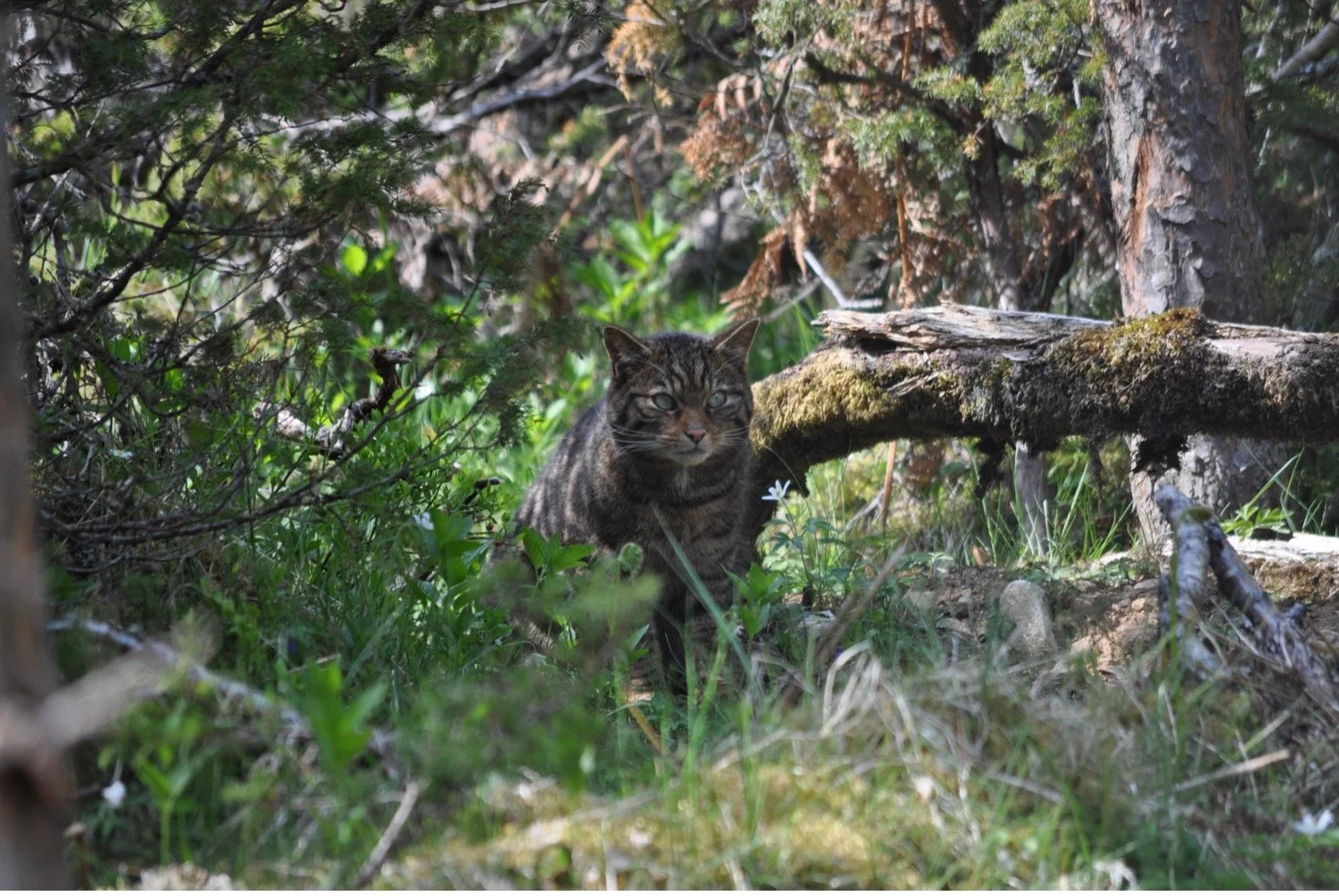
Historic milestone reached as critically endangered wildcats released into the Cairngorms National Park
Led by the Royal Zoological Society of Scotland (RZSS), the Saving Wildcats partnership has released the cats into undisclosed locations within the Cairngorms Connect landscape of the Cairngorms National Park where they will be carefully monitored using GPS-radio collars.
Approved under licence by NatureScot, the trial releases are the first-ever conservation translocation of wildcats in Britain in an effort to help restore Scotland’s critically endangered wildcat population. Approximately sixty wildcats will be released over the next three years.
The project, which has undertaken widespread engagement with local communities, has drawn on global conservation and scientific expertise to further understanding of wildcat ecology and behaviour.
David Field, Chair of the Saving Wildcats Project Board and Chief Executive Officer of the Royal Zoological Society of Scotland, said:
“We are delighted that the Saving Wildcats partnership has taken this historic step towards securing a future for the species in Scotland.
“The time is now to give the ‘Highland Tiger’ the best chance of survival and I am thankful for the work of our team members, partners and supporters in making this happen.
“I am also particularly grateful for the support of our local community in the Cairngorms as, without their engagement, we would not have reached this exciting milestone.”
Lorna Slater, Minister for Green Skills, the Circular Economy and Biodiversity, said:
“Wildcats are a much loved native species in Scotland and yet their very existence is under threat.
“This announcement is welcome news and is an important step in ensuring the survival of the species.
“Reversing the dramatic losses in nature that we have seen in recent times is one of the defining challenges that our country faces. The Scottish Government remains committed to this fight and is actively working towards protecting and restoring our natural environment and the animals that rely upon it.
“I’d like to thank everyone that has been involved for their incredible hard work that has got us to this position. I look forward to seeing the progress of the wildcats as they settle into their new home in Scotland’s iconic Cairngorms National Park.”
Dr David Hetherington, Nature Networks Manager at the Cairngorms National Park Authority said:
“This is indeed a milestone moment for the species, which takes place against the backdrop of large-scale habitat restoration and connection unfolding across the Cairngorms National Park.
“This conservation project is the most ambitious for the wildcat in Scotland to date and it’s great to see it taking place here.”
Alex Macleod, Forestry and Land Scotland North Region Manager and Cairngorms Connect Board Member, said;
“The Cairngorms Connect Partners are committed to a 200-year vision to restore habitats, ecological processes, and species across a vast area of the Cairngorms National Park.
“The size, scale, and positive impact of our restoration efforts, make this landscape a great release location for the first conservation translocation of wildcats in Britain. We’re delighted to be a part of restoring this amazing species in Scotland.”
Simon Hodgson, Forestry and Land Scotland Chief Executive, said:
‘‘We are proud to support this initiative and to help it develop to the next stage and strengthen the wildcat population further. Our land management across Scotland helps to create a mosaic of interconnected habitats. At a landscape scale this is attractive to and beneficial for wildcats.
“We expect these new wildcats will do well and would hope that their release inspires everyone to do their bit and respect and take care of the environment in which the wildcats thrive.”
NatureScot Chief Executive Francesca Osowska said:
“A huge amount of work has laid the ground for these wildcat releases, and we’re proud to have played our part in that. Our research shows that wildcats are facing extinction in Scotland, which makes conservation translocations like this a vital tool for the species’ recovery.
“We have a good track-record of conservation translocation success in Scotland, with golden eagle, white-tailed eagle and beaver populations all recovering and supporting efforts to regenerate biodiversity. The newly-released wildcats will face significant challenges as they seek to establish themselves, so it’s crucial we continue to do everything we can to give them the best chance to survive, and thrive, in Scotland.”
Thomas MacDonell, Director of Conservation for Wildland Limited, on behalf of Cairngorms Connect said:
“It’s fantastic that Cairngorms Connect have been selected as a suitable release site for these critically endangered cats and it is the best possible reward for the whole team at Wildland, along with the Cairngorms Connect partnership, to receive such recognition for all the hard work involved during the first twenty years we have been restoring our precious landscape.
“The Saving Wildcats team have been a pleasure to work with and we wish the cats every success in becoming an integral part of the wild ecosystem and our futures.”
The cats were born in a purpose-built off-show conservation breeding for release centre based at Highland Wildlife Park, near Aviemore, in 2022.
Despite detailed preparations ahead of the first release, one of the most difficult aspects of any conservation translocation is predicting how an animal will respond to being released.
Dr Helen Senn, Project lead and Head of Science and Conservation Programmes for the Royal Zoological Society of Scotland, said:
“We hope that this project will pave the way for the full recovery of Scotland’s last remaining native cat species.
“Unfortunately, life is tough for wild carnivores and the sad reality is that some of the wildcats that we release will not survive due to threats such a road traffic. Their survival is contingent on their individual behaviour in a new environment. While the Saving Wildcats team have made every effort to prepare the wildcats by moving them into large pre-release enclosures which support natural development, informed by other successful carnivore recovery projects such as Iberian lynx in Spain and Portugal, they cannot ultimately control how the cats will react.
“However, we also know that inaction will result in extinction. As human activity is responsible for the wildcat’s decline, we have a responsibility to take action now to protect one of our rarest and most threatened mammals.
“Everything we learn from this closely monitored first trial release will help inform future releases.”
The conservation breeding and release of wildcats is being carried out by the Saving Wildcats partnership (#SWAforLIFE) led by the Royal Zoological Society of Scotland (RZSS) in collaboration with NatureScot, Forestry and Land Scotland (FLS), The Cairngorms National Park Authority, Norden’s Ark and Junta de Andalucía. Releases are being conducted with the support of Cairngorms Connect.
The project is funded with the contribution of the LIFE Programme of the European Union and other partners and organisations.
Within the lifespan of the project, it’s envisioned that approximately 20 cats will also be released in 2024 and 2025 from the conservation breeding for release centre.
The cats bred for release are not available for public viewing to help them prepare for life in the wild.
The Saving Wildcat team will now focus on following the wildcats’ new lives in the wild and preparing the second generation of wildcats for release next year. Further updates from the project are expected to be issued at the end of the summer release period. Regular news from the project will be shared in the Saving Wildcats newsletter. Those wishing to support a wildcat family can sponsor a parent in the breeding centre.
Wild Isles TV Series
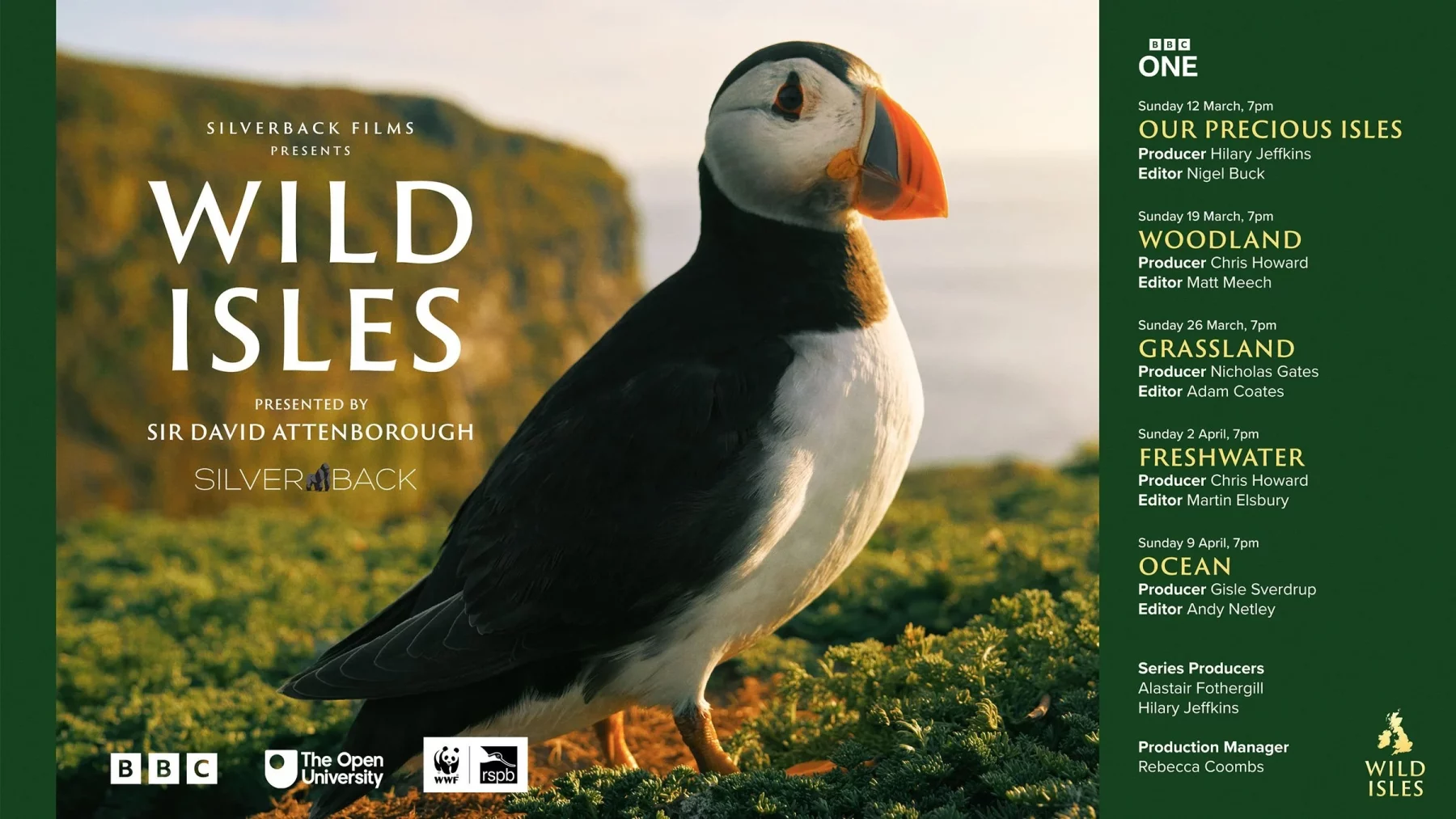
Many of you will have already watched the first episodes of new documentary TV series Wild Isles which was first aired on BBC1 earlier this month. Narrated by the legendary Sir David Attenborough, the series showcases different wildlife species from locations across the UK with stunning imagery and remarkable camera footage.
The team at Wildland were delighted to be invited to contribute to the series, which would not have been possible without the collective efforts of so many talented and skilled people, working together for greater good of nature. We are all very proud of the series and hope that those of you that watch it will feel the same.
You can catch up on the series at any time on BBC iPlayer and watch the latest episodes on Sunday evenings at 7pm on BBC1.
We are particularly excited about the up and coming episodes on the 26th of March and 2nd of April which feature fantastic wildlife footage direct from Wildland estates. The episode on the 9th of April will also feature footage from off the coast of our more northern estates.
Coverage such as this, highlights some of the ongoing successes of our conservation and habitat management work. We are delighted to showcase these wildlife successes with a wider audience.
We are also immensely proud that one of our team members, Ronan, and our partners at Cairngorms Connect are featuring in a complementary episode that will be available to watch on the BBC iPlayer from the 9th of April. Well deserved recognition to some very passionate and knowledgeable people.
If you haven’t watched the series so far, we recommend that you do!